Sunday, April 14, 2024

Why is hate speech detection in short text challenging?


.

Detecting hate speech in short text poses significant challenges due to various factors. 

Firstly, the limited length of short text restricts the amount of available linguistic context, making it harder to accurately interpret the intent and meaning behind the words. 

Additionally, hate speech can be expressed through subtle cues or coded language, which may be harder to identify in short and condensed texts. 

The informal and abbreviated nature of short text, including the use of slang and unconventional grammar, further complicates the detection process. 

Moreover, hate speech is highly context-dependent, and short texts often lack the necessary contextual information to make accurate judgments. 

Lastly, the imbalance in labeled datasets, with limited availability of diverse and representative examples of hate speech in short texts, poses a challenge for training accurate and unbiased detection models.

.

Read More

What is Short Texts?


.

Short texts refer to textual data that consists of a small number of words or characters. Unlike longer texts, which can span multiple paragraphs or pages, short texts are typically concise and contain limited information.


Short texts can take various forms, including social media posts, tweets, chat messages, product reviews, headlines, and search queries. These texts are often characterized by their brevity, which presents unique challenges for natural language processing (NLP) tasks and analysis.


Key characteristics of short texts:


1. Lack of context: Short texts often lack the surrounding context that longer texts provide. They may not contain explicit information about the topic, background, or context of the communication. This absence of context can make it more challenging to understand the intended meaning or perform accurate analysis.


2. Informal language: Short texts tend to be written in a more casual and informal style, particularly in social media or messaging platforms. This can include the use of abbreviations, acronyms, slang, emoticons, or unconventional grammar and spelling. Understanding and processing such informal language can be difficult for NLP models.


3. Noisy and incomplete information: Due to their brevity, short texts often lack comprehensive information. They may only provide a snippet of a larger conversation or express an idea in a condensed form. Additionally, short texts can contain noise, such as typographical errors, misspellings, or incomplete sentences, which can further complicate NLP tasks.


4. Domain-specific challenges: Short texts in specific domains, such as medical or legal texts, can present additional challenges. These domains often have specialized vocabulary, technical terms, or jargon that may require domain-specific knowledge for accurate understanding and analysis.


Handling short texts in NLP tasks requires specialized techniques and models that can effectively capture the limited context and extract meaningful information from the available text. Techniques such as word embeddings, recurrent neural networks (RNNs), or transformer-based models like BERT or GPT have been employed to address the challenges associated with short texts.


Short text analysis finds applications in various areas, including sentiment analysis, topic classification, spam detection, chatbot systems, social media monitoring, and customer feedback analysis, among others.

.

Read More

Saturday, April 13, 2024

Differences between multi-label, multi-class, and binary classification


.

The main differences between multi-label, multi-class, and binary classification are:


1. Multi-Label Classification:

   - In multi-label classification, each instance can be associated with multiple labels simultaneously.

   - The goal is to predict the relevant subset of labels for each instance.

   - The labels are not mutually exclusive, and an instance can have any combination of labels.

   - Examples: document classification (e.g., a document can be about "politics" and "economics"), image tagging (an image can contain "dog", "cat", "tree"), etc.


2. Multi-Class Classification:

   - In multi-class classification, each instance is associated with exactly one label from a set of multiple exclusive classes.

   - The goal is to predict the single, correct label for each instance.

   - The labels are mutually exclusive, and an instance can only belong to one class.

   - Examples: classifying an image as "dog", "cat", or "horse", or classifying an email as "spam" or "not spam".


3. Binary Classification:

   - In binary classification, each instance is associated with one of two possible labels.

   - The goal is to predict whether an instance belongs to the "positive" class or the "negative" class.

   - The labels are mutually exclusive, and an instance can only belong to one of the two classes.

   - Examples: predicting whether a patient has a certain disease or not, or predicting whether an email is "spam" or "not spam".


The key differences are:


- Number of Labels: Multi-label has multiple labels per instance, multi-class has one label per instance, and binary has two labels per instance.

- Label Exclusivity: Multi-label labels are not mutually exclusive, multi-class labels are mutually exclusive, and binary labels are mutually exclusive.

- Complexity: Multi-label classification is generally more complex than multi-class, which is more complex than binary classification.


The choice between these approaches depends on the specific problem and the nature of the data being used. Multi-label classification is suitable when instances can belong to multiple categories, multi-class classification is suitable when instances belong to one of multiple exclusive categories, and binary classification is suitable when instances belong to one of two exclusive categories.

.

Read More

Key characteristics of multi-label datasets


  1. Multiple Labels per Instance: Each instance in the dataset can have one or more associated labels, rather than just a single label.
  2. Dependent Labels: The labels in a multi-label dataset can be dependent on each other, meaning that the presence of one label may be related to the presence of another.
  3. Imbalanced Labels: The distribution of labels in a multi-label dataset is often imbalanced, with some labels being much more common than others.
  4. Computational Complexity: Handling multi-label datasets can be computationally more complex than single-label datasets, as the model needs to learn to predict multiple labels simultaneously.


Read More

What is Multi-label dataset?


.

A multi-label dataset is a type of dataset where each data instance can be associated with multiple labels or categories simultaneously. In contrast to a single-label dataset, where each instance is assigned to only one label, multi-label datasets allow for more complex and nuanced classification tasks.


In a multi-label dataset, each data instance is typically represented by a set of features or attributes, and the associated labels are represented as binary indicators or multi-hot vectors. Each label corresponds to a specific category or class, and the binary indicator indicates whether the instance belongs to that particular category or not. For example, in a hate speech detection task, a multi-label dataset may include instances labeled with categories such as hate speech, offensive language, and abusive content, where each instance can be associated with one or more of these labels.


The presence of multiple labels in a dataset introduces additional complexity in the classification task. It allows for scenarios where an instance can belong to multiple categories simultaneously, capturing the multi-faceted nature of real-world problems. Multi-label classification techniques and models are specifically designed to handle such datasets and make predictions for multiple labels.


When working with multi-label datasets, evaluation metrics differ from those used in single-label classification. Common evaluation measures for multi-label classification include precision, recall, F1-score, and metrics like Hamming loss or subset accuracy. These metrics assess the model's performance in predicting each label independently and capturing the overall label dependencies.


Multi-label datasets are commonly used in various applications, such as text categorization, image classification, video tagging, and recommendation systems, where instances can belong to multiple categories simultaneously.

.

Read More

Friday, March 15, 2024

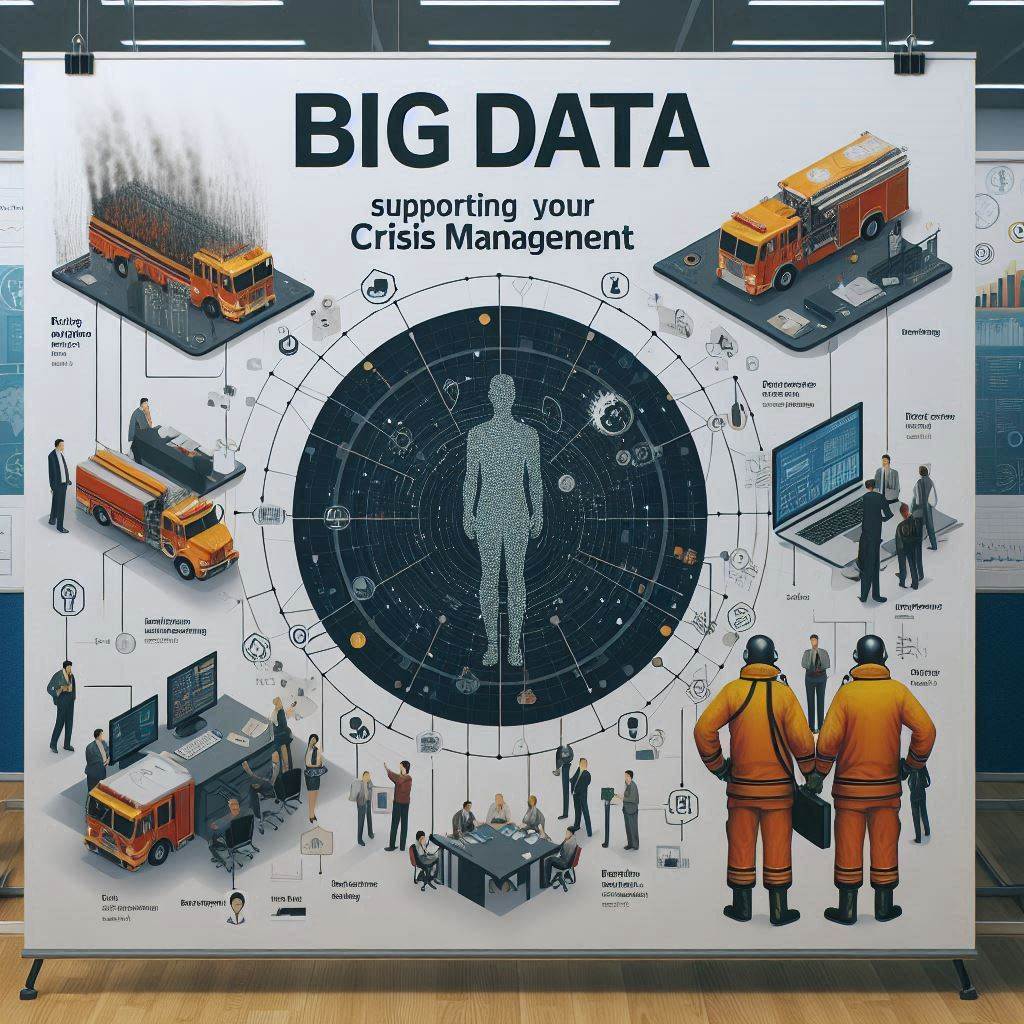
How can big data assist governments and organizations in responding to human crises?

.

Big data can play a significant role in assisting governments and organizations in responding more effectively to human crises in several ways:


1. Situational Awareness:

   - Aggregating and analyzing real-time data from various sources (social media, sensors, satellite imagery, etc.) to gain a comprehensive understanding of the crisis situation.

   - Identifying emerging trends, hotspots, and resource needs to guide resource allocation and decision-making.


2. Predictive Modeling:

   - Leveraging historical data and machine learning algorithms to forecast the evolution of the crisis and potential impacts.

   - Anticipating resource requirements, infrastructure vulnerabilities, and population displacement patterns to enable proactive planning.


3. Targeted Interventions:

   - Using data-driven insights to tailor relief efforts and target assistance to the most vulnerable communities and individuals.

   - Optimizing distribution networks and supply chains to ensure timely delivery of essential supplies and services.


4. Coordination and Communication:

   - Integrating data from multiple agencies and organizations to improve cross-agency coordination and information-sharing.

   - Empowering responders with real-time data visualizations and decision support tools to enhance situational awareness and responsiveness.


5. Monitoring and Evaluation:

   - Collecting and analyzing data on the effectiveness of crisis response efforts to inform continuous improvement and future planning.

   - Identifying gaps, inefficiencies, and unintended consequences to guide policy and program adjustments.


6. Community Engagement:

   - Leveraging data to understand the needs, concerns, and perspectives of affected communities.

   - Enabling citizen-generated data and feedback to improve the relevance and responsiveness of crisis response efforts.


To maximize the benefits of big data in crisis response, governments and organizations need to invest in robust data infrastructure, analytical capabilities, and cross-sector collaboration. Ethical considerations around data privacy, security, and responsible use of data must also be carefully addressed to ensure the protection of vulnerable populations and the integrity of crisis response efforts.


. 

Read More

What are some common challenges faced by governments and organizations in responding to human crises?

.

Governments and organizations often face several key challenges when responding to human crises, including:

1. Logistical challenges:

   - Coordinating the mobilization and distribution of emergency aid, supplies, and personnel to affected areas.

   - Establishing effective communication and information-sharing systems.

   - Ensuring access to crisis zones, especially if infrastructure is damaged or security is unstable.

2. Resource constraints:

   - Securing sufficient funding, equipment, and personnel to meet the scale of the crisis.

   - Balancing crisis response with other pressing priorities and obligations.

   - Managing the competing demands from multiple affected communities.

3. Operational complexity:

   - Navigating complex political, cultural, and legal environments in crisis zones.

   - Adapting response strategies to rapidly evolving, unpredictable conditions.

   - Mitigating risks to the safety and well-being of aid workers.

4. Socioeconomic factors:

   - Addressing the underlying socioeconomic vulnerabilities that exacerbate the crisis.

   - Ensuring equitable access to relief and recovery assistance.

   - Promoting long-term resilience and sustainability in affected communities.

5. Coordination challenges:

   - Aligning the efforts of multiple government agencies, international organizations, and local stakeholders.

   - Resolving jurisdictional disputes and power dynamics between different actors.

   - Establishing clear command structures and decision-making processes.


Overcoming these challenges requires robust planning, flexible response capabilities, effective coordination, and a commitment to addressing the root causes of human crises. 

Continuous learning and adaptation are also crucial as governments and organizations strive to improve their crisis management strategies over time.

. 

Read More

What is human crisis?

 .

A human crisis is a situation that poses a serious threat or danger to the well-being, safety, or survival of people. Some examples of human crises include:

  • Natural disasters like earthquakes, floods, hurricanes, or wildfires that cause widespread destruction and displacement of people.
  • Man-made disasters like wars, famines, or environmental catastrophes that lead to humanitarian emergencies.
  • Public health crises like disease outbreaks, pandemics, or shortages of medical resources that put large populations at risk.
  • Socioeconomic crises like economic recessions, financial collapses, or political upheavals that severely impact people's livelihoods and access to basic necessities. 
Crises often require urgent, large-scale responses from governments, international organizations, and humanitarian aid groups to save lives, provide relief, and help affected populations recover. 

The causes, duration, and impacts of human crises can vary greatly, but they all involve serious threats to human welfare that demand coordinated action to address.

.

Read More

Thursday, February 15, 2024

Multi-Label Short Text Sentiment Classification

.

Short text multi-label sentiment text classification refers to the task of assigning multiple sentiment labels to short text inputs. Unlike traditional sentiment analysis, where the goal is to classify the sentiment of a given text as positive, negative, or neutral, short text multi-label sentiment classification aims to predict multiple sentiment labels simultaneously.


In this task, the input consists of short texts, such as tweets, product reviews, or customer feedback, and the model needs to predict the sentiment associated with each input text across multiple categories or dimensions. For example, instead of assigning a single sentiment label like "positive" or "negative," the model might need to predict labels such as "positive," "negative," "neutral," "happy," "sad," or "angry" for a given short text.


Short text multi-label sentiment classification can be challenging due to the limited context available in short texts and the need to predict multiple sentiments simultaneously. It often requires advanced natural language processing (NLP) techniques, machine learning algorithms, or deep learning models to effectively capture the nuanced sentiment information present in short texts.


Some common approaches for short text multi-label sentiment classification include:


1. Binary Relevance: Treat each sentiment label as a separate binary classification problem. Train a separate classifier for each sentiment label and predict the presence or absence of each sentiment label independently.


2. Label Powerset: Treat the multi-label classification problem as a single multi-class classification problem by considering all possible label combinations as distinct classes. Train a classifier to predict the presence of each label combination.


3. Deep Learning Models: Utilize deep learning architectures such as recurrent neural networks (RNNs), convolutional neural networks (CNNs), or transformer-based models (e.g., BERT) to capture the semantic information and contextual relationships in short texts.


4. Ensemble Methods: Combine the predictions of multiple classifiers or models to improve performance. This can be done by using techniques like voting, stacking, or bagging.


The choice of approach depends on the specific characteristics of the dataset, the available computational resources, and the desired performance. Experimentation and fine-tuning are usually necessary to achieve the best results in short text multi-label sentiment classification tasks. 


.

To perform multi-label sentiment text classification on Twitter data using Python, you can follow these general steps:


1. Data Preparation: Obtain a labeled dataset of Twitter data where each tweet is associated with multiple sentiment labels. You can either collect and manually label the data or search for publicly available datasets.


2. Data Cleaning and Preprocessing: Perform necessary data cleaning steps such as removing special characters, URLs, and stopwords. You may also want to perform stemming or lemmatization to reduce words to their base form. Additionally, split the dataset into training and testing sets.


3. Feature Extraction: Convert the preprocessed text into a numerical representation that machine learning algorithms can understand. Common techniques include:


   - Bag-of-Words: Represent each tweet as a vector of term frequencies.

   - TF-IDF: Assign weights to the terms based on their importance in the tweet and the entire corpus.

   - Word Embeddings: Use pre-trained word embeddings such as Word2Vec or GloVe to represent words as dense vectors.


4. Model Selection: Choose a suitable machine learning model for multi-label classification. Some popular models for text classification include:


   - Naive Bayes: A simple probabilistic classifier that works well with text data.

   - Support Vector Machines (SVM): Effective for high-dimensional data with a clear separation between classes.

   - Random Forest: An ensemble model that combines multiple decision trees.

   - Deep Learning Models: Such as recurrent neural networks (RNNs) or transformers (e.g., BERT) that can capture complex relationships in text.


5. Model Training: Fit the selected model on the training data and tune its hyperparameters to optimize performance. Consider using techniques like cross-validation to avoid overfitting.


6. Model Evaluation: Evaluate the trained model using appropriate evaluation metrics such as accuracy, precision, recall, and F1-score. Since it's a multi-label classification task, you may also consider metrics like Hamming loss or Jaccard similarity.


7. Prediction: Use the trained model to make predictions on new, unseen data. You can then analyze the predicted sentiment labels for each tweet.


Here's a simplified example using scikit-learn's `MultiOutputClassifier` wrapper to perform multi-label classification using a Random Forest model:


Scikit-learn's MultiOutputClassifier is a wrapper class that allows you to perform multi-label classification by extending single-label classifiers to handle multiple labels simultaneously. It treats each label as an independent binary classification problem and trains a separate classifier for each label.

Logistic regression is used as an example classifier for multi-label sentiment classification. Logistic regression is a commonly used algorithm for binary classification tasks, and it can be extended to handle multi-label classification as well.

There are a few reasons why logistic regression is a suitable choice for multi-label sentiment classification:

Simplicity: Logistic regression is a relatively simple and interpretable algorithm. It models the relationship between the input features and the probabilities of different classes using a logistic function. This simplicity makes logistic regression easy to implement and understand.

Efficiency: Logistic regression is computationally efficient and can handle large datasets with a moderate number of features. It also converges relatively quickly during training.

Probability outputs: Logistic regression models provide probability outputs for each class. These probabilities can be useful for understanding the confidence of the classifier's predictions and for post-processing tasks such as thresholding or ranking the predicted labels.

.

Read More

Tuesday, February 13, 2024

What is Emotions?


.

Emotions are physical and mental states brought on by neurophysiological changes, variously associated with thoughts, feelings, behavioral responses, and a degree of pleasure or displeasure.[1][2][3][4] There is no scientific consensus on a definition.[5][6] Emotions are often intertwined with mood, temperament, personality, disposition, or creativity.[7]

Research on emotion has increased over the past two decades, with many fields contributing, including psychology, medicine, history, sociology of emotions, and computer science. The numerous attempts to explain the origin, function, and other aspects of emotions have fostered intense research on this topic.

From a mechanistic perspective, emotions can be defined as "a positive or negative experience that is associated with a particular pattern of physiological activity."[4] Emotions are complex, involving multiple different components, such as subjective experience, cognitive processes, expressive behavior, psychophysiological changes, and instrumental behavior.

.

Reference: https://en.wikipedia.org/wiki/Emotion


Read More