Sunday, October 13, 2013

Best HTML5 Editors for Developers

copied from: http://www.bcstatic.com/best-html5-editors-for-developers/
-----
HTML5 is one of the most popular language amongst developers and designers as it provides numerous functionality and assists developers to easily design web applications & HTML5 has garnered plenty of attention in the last two years, and for good reasons. The internet as we know it is changing, and HTML5 is at the forefront of those changes.HTML5 is one of the most popular language amongst developersand designers as it provides numerous functionality.HTML5 editor can be considered as tool or software which helps developers to design interactive html pages or even websites and HTML editors offer more functionality and work with technologies like CSS, XML and JavaScript.
We have gathered best HTML5 editors which will enable designers and developers within their given workflow.Hope they will fulfill your needs.

Maqetta
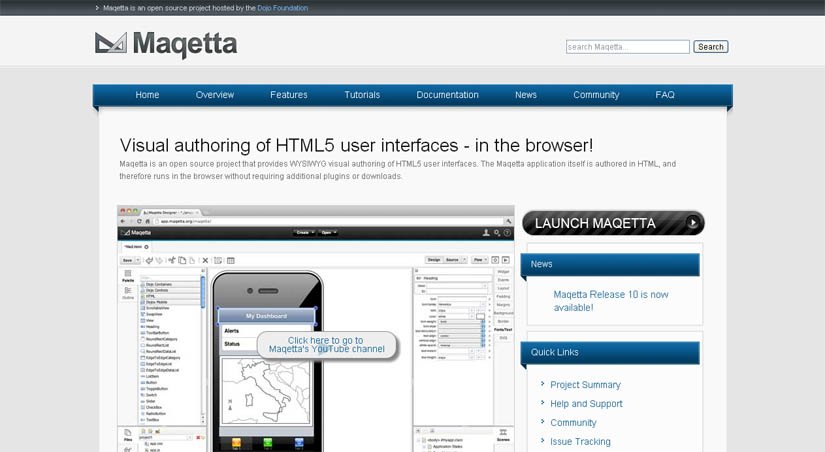
Maqetta-html5-editor
Maqetta is an open source project that provides WYSIWYG visual authoring of HTML5 user interfaces. The Maqetta application itself is authored in HTML, and therefore runs in the browser without requiring additional plugins or downloads.

Aptana Studio
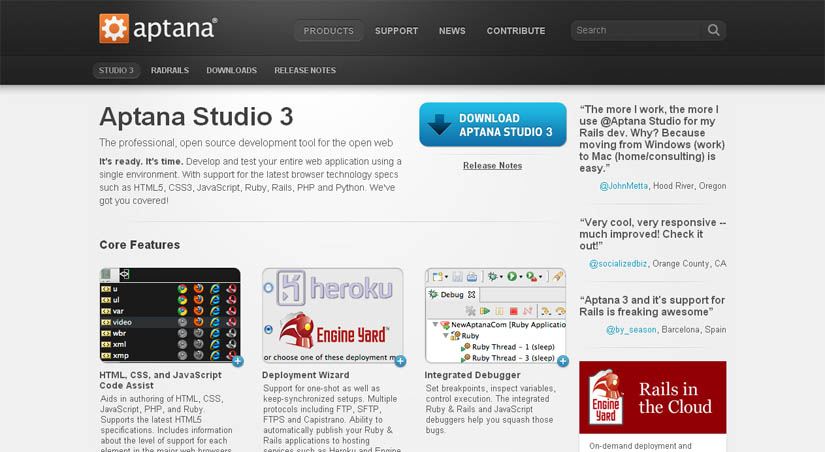
aptana-studio-html5-editor
Aptana Studio 3 is an open source development tool for the developers; it enables developer to test their web applications using single environment.

Aloha Editor
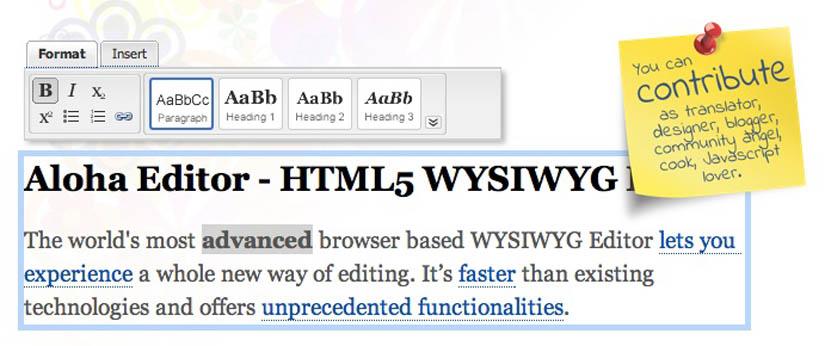
aloha-html5-editor
Aloha Editor is a rich text editor developed in JavaScript and is a browser based framework. Aloha can be embedded within a content management system (CMS) and other frameworks used for blogs and web development in general.

Blue Griffon
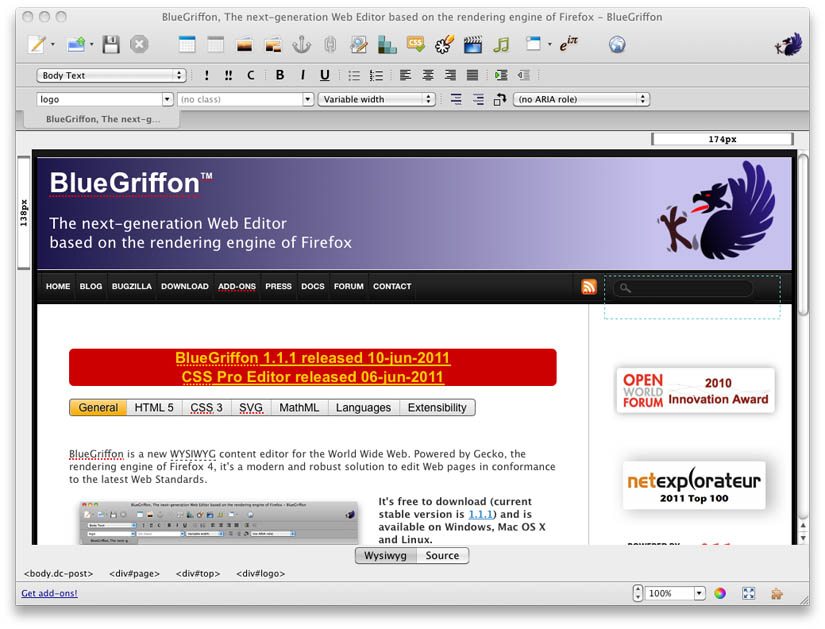
blue-griffon-html5-editor
BlueGriffon is a new WYSIWYG content editor for the World Wide Web. Powered by Gecko, the rendering engine of Firefox, it’s a modern and robust solution to edit Web pages in conformance to the latest Web Standards.

Mercury Editor
mercury-html5-editor
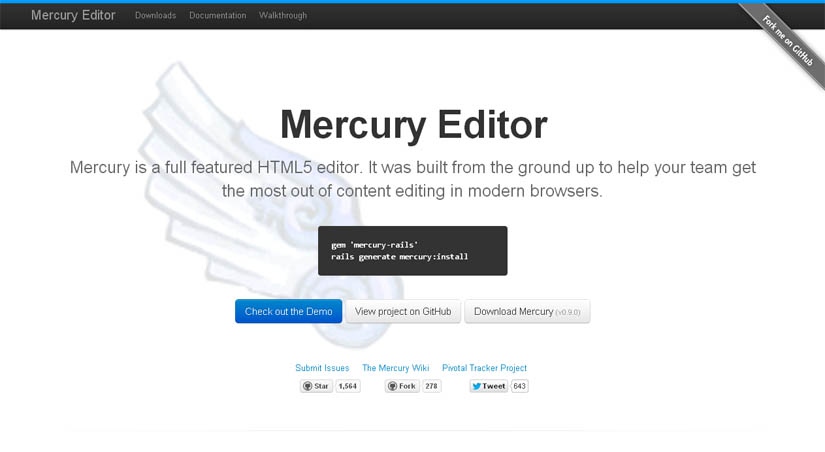
Mercury is a full featured HTML5 editor, built on the top of the HTML5 Content Editable features, it natively supports all HTML5 elements syntax and JavaScript APIs. It supports full HTML, simple, markdown, snippet and image regions.

Rendra : Online HTML5 Editor
Rendera-online-html5-editor
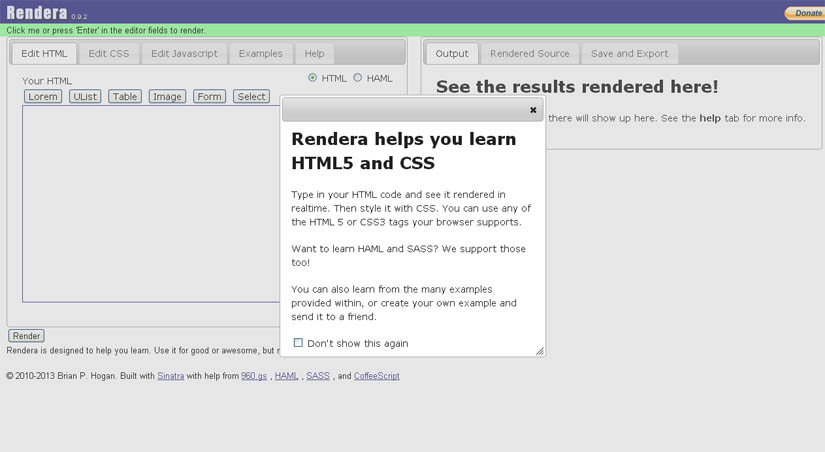
Rendera is an online HTML5 editor which renders a realtime preview of your current work also transform your current work into CSS, Rendera supports HAML and SASS. Rendera makes learning HTML5 and CSS3 easy and it is built with CoffeeScript and Sinatra.
Read More

What is Web Documents?


-----


A web document is similar in concept to a web page, but also satisfies the following broader definition by W3C:

"... Every Web document has its own URI. Note that a Web document is not the same as a file: a single Web document can be available in many different formats and languages, and a single file, for example a PHP script, may be responsible for generating a large number of Web documents with different URIs. A Web document is defined as something that has a URI and can return representations (responses in a format such as HTML or JPEG or RDF) of the identified resource in response to HTTP requests. In technical literature ... the term Information Resource is used instead of Web document.".
Read More

Monday, December 31, 2012

Introduction to natural language processing

This half unit course combines a critical introduction to key topics in theoretical and computational linguistics with hands-on practical experience of using existing software tools and developing applications to process texts and access linguistic resources. 

The aims of the course and learning outcomes are listed in Chapter 1. This course has no specific prerequisites. There will be some programming involved and you will need to acquire some familiarity with the Python language, but you will not be expected to develop substantial original code or to encode specialised algorithms. 

The course involves some statistical techniques, but the only mathematical knowledge assumed is an understanding of elementary probability and familiarity with the concept of logarithms. Before the advent of the world wide web, most machine-readable information was stored in structured databases and accessed via specialised query languages such as Structured Query Language (SQL). Nowadays the situation is reversed: most information is found in unstructured or semi-structured natural language documents and there is increasing demand for techniques to ‘unlock’ this data. Computing graduates with knowledge of natural language processing techniques are finding employment in areas such as text analytics, sentiment analysis, topic detection and information extraction.

Read More